The Regulatory Reality: Liability Shifts to the Board
The EU’s NIS2 Directive is not just another compliance update; it is a structural shift in how security accountability is handled. Replacing the outdated NIS1 framework, NIS2 significantly expands the scope of obligated entities, moving the focus from static documentation to dynamic, technical risk management. For DACH mid-market leaders, the implications are severe. In Germany, the implementation via the BSI-Gesetz places strict liability on management boards, not just IT departments. Non-compliance can result in fines of up to 10 million euros or 2% of global turnover.
For ‘essential’ and ‘important’ entities, the era of ‘check-the-box’ compliance is over. Regulators now expect proof of active risk management. This guide outlines the ten core technical measures required to meet these standards, providing a concrete roadmap for DACH companies to secure their infrastructure and their leadership’s liability.
Foundation: Knowing What You Have
You cannot protect what you do not know. The first step in any NIS2 implementation is a comprehensive, automated asset inventory. This is not a one-time project but a continuous discovery process. Manual spreadsheets are insufficient for real-time compliance; they become obsolete the moment a new cloud service is spun up.
Key Actions:
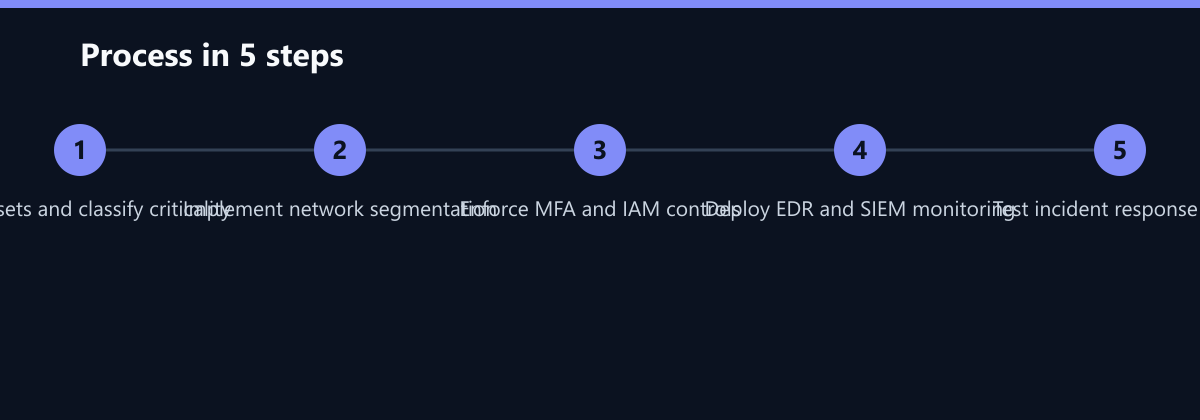
- Map all digital assets (hardware, software, cloud services, third-party interfaces) to specific business processes.
- Classify assets by criticality: essential, important, or non-critical.
- Identify external dependencies and supply chain risks immediately.
Automated discovery tools are required to maintain an accurate baseline. If an asset is unknown, it is a liability. The inventory must serve as the single source of truth for all subsequent security controls.
Strategic Risk Management
NIS2 requires a documented risk management policy that is alive, not archived. This is a continuous process of identifying threats, assessing their likelihood and impact, and defining mitigation strategies. The output must be a living document that informs budget decisions and technical investments. It serves as the primary evidence for regulators during audits.
Key Actions:
- Conduct annual risk assessments using recognized frameworks (e.g., ISO 27005).
- Document risk acceptance criteria approved explicitly by the board.
- Align technical controls with specific risk scenarios.
The board must sign off on the risk appetite. This creates a direct line of accountability from technical findings to strategic decisions.
Securing the Perimeter: Segmentation and Zero Trust
Flat networks allow lateral movement during an attack. NIS2 compliance requires strict segmentation to isolate critical infrastructure from general business networks. Zero Trust principles assume no implicit trust, even within the internal network. This limits the blast radius of a breach. If a workstation is compromised, the attacker should not be able to pivot to the server room or OT systems.
Key Actions:
- Implement micro-segmentation for critical assets.
- Enforce least-privilege access policies for all users and services.
- Deploy network access control (NAC) solutions.
Identity as the New Perimeter
Identity is the new perimeter. Weak authentication is the leading cause of data breaches. NIS2 mandates strong authentication for all access to critical systems. Centralized identity management is no longer optional; it is the gatekeeper for your entire digital estate.
Key Actions:
- Enforce Multi-Factor Authentication (MFA) for all remote and internal admin access.
- Implement centralized identity management (e.g., Microsoft Entra ID).
- Automate provisioning and de-provisioning of user accounts to prevent orphaned accounts.
Regular access reviews are required. Privileged accounts must be monitored and restricted. While password policies enforce complexity, MFA is the primary control that actually stops credential theft.
Endpoint Defense: Moving Beyond Antivirus
Traditional antivirus software is insufficient against modern threats. NIS2 expects proactive detection and response capabilities on all endpoints. You need visibility into what is happening on the device, not just a list of blocked signatures.
Key Actions:
- Deploy EDR (Endpoint Detection and Response) agents on all workstations and servers.
- Configure real-time threat detection and automated isolation capabilities.
- Integrate EDR with the central Security Operations Center (SOC).
EDR provides visibility into file system changes, process execution, and network connections. It allows IT teams to detect anomalies before they escalate into full-scale incidents.
Configuration and Patch Discipline
Unpatched systems are the easiest target for attackers. A formal patch management policy is mandatory under NIS2. This includes operating systems, applications, and firmware. Deviation from the baseline must be documented and justified.
Key Actions:
- Establish a patching schedule with defined SLAs (e.g., critical patches within 48 hours).
- Use automated patch deployment tools to reduce human error.
- Maintain a configuration baseline for all systems.
Regular vulnerability scans should verify the effectiveness of the patching process and identify configuration drift. If a system is not patched, it is a known risk that must be accepted or mitigated.
Resilience: Backup and Disaster Recovery
Availability is a core pillar of NIS2. You must be able to restore critical operations after a disruption. Backups are not just for data loss; they are a primary ransomware countermeasure.
Key Actions:
- Implement the 3-2-1 backup strategy (3 copies, 2 media, 1 offsite).
- Ensure backups are immutable (cannot be deleted or modified by ransomware).
- Test restore procedures quarterly.
Document the Recovery Time Objective (RTO) and Recovery Point Objective (RPO) for each critical service. Regular disaster recovery drills validate that the plan works in a real-world scenario. A backup that has not been restored is not a backup.
Visibility: Logging and Monitoring
You cannot respond to what you do not see. Centralized logging and real-time monitoring are essential for detecting incidents within the mandated reporting timeframe.
Key Actions:
- Aggregate logs from all critical systems into a SIEM (Security Information and Event Management) platform.
- Define detection rules for known attack patterns.
- Monitor network traffic for anomalies.
Logs must be retained for at least 12 months. The monitoring system should trigger alerts for suspicious activities, enabling the security team to investigate and mitigate threats proactively.
Supply Chain Liability
NIS2 extends liability to the supply chain. You are responsible for the security posture of your critical suppliers. This requires contractual and technical measures to ensure their compliance.
Key Actions:
- Conduct security assessments of critical third-party providers.
- Include security and incident notification clauses in contracts.
- Monitor third-party access to your systems.
Map the dependency chain for all critical services. If a supplier fails, your operations must remain available. This involves defining alternative suppliers or fallback procedures.
Incident Response: Speed is Critical
Speed is critical. NIS2 requires notification of significant incidents within 24 hours, with a full analysis within 72 hours. You need a tested incident response plan.
Key Actions:
- Define an incident response team with clear roles and responsibilities.
- Establish communication channels for internal and external reporting.
- Conduct regular incident response simulations.
The plan must cover detection, containment, eradication, and recovery. It should also include legal and PR aspects, as public communication during a crisis is a significant risk factor.
Typical Mistakes to Avoid
- Treating NIS2 as a one-time audit: Compliance is a continuous state. If you stop monitoring after the initial setup, you are non-compliant.
- Ignoring the supply chain: Many breaches originate from third-party vendors. If you do not assess their security, you are assuming their risk.
- Relying on manual processes: Manual patching and manual access reviews are too slow and error-prone for NIS2 standards.
- Lack of board engagement: If the board does not sign off on risk acceptance, you lack the governance required by the BSI-Gesetz.
How You Measure Success
To ensure your NIS2 implementation is effective, track these KPIs:
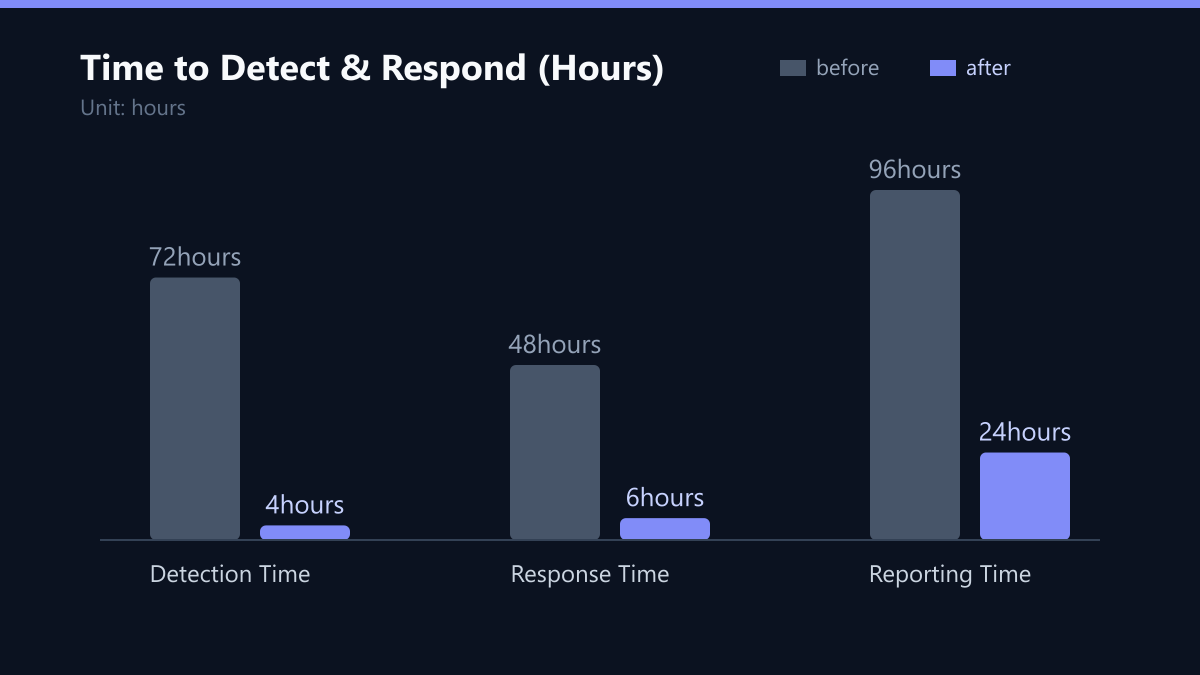
- Mean Time to Detect (MTTD): Target < 4 hours. Measure from initial alert to analyst confirmation.
- Mean Time to Respond (MTTR): Target < 6 hours. Measure from confirmation to containment.
- Patch Compliance Rate: Target > 95%. Percentage of critical assets patched within SLA.
- Incident Reporting Time: Must be < 24 hours. This is a hard regulatory limit.
Use your SIEM and EDR tools to generate these metrics automatically. Review them monthly with the board to demonstrate active management.
Checklist for Implementation
- Asset inventory automated and up-to-date.
- Risk assessment conducted and board-approved.
- Network segmentation implemented for critical assets.
- MFA enforced for all remote and admin access.
- EDR deployed on 100% of endpoints.
- Patch management SLA defined and monitored.
- Immutable backups tested quarterly.
- SIEM deployed with 12-month log retention.
- Third-party security assessments completed.
- Incident response plan tested within the last 6 months.