The Strategic Cost of the Wrong Choice
Selecting a technology stack is rarely just a technical decision; it is a financial commitment that defines your operational trajectory for the next five to ten years. For mid-market companies, the pressure to balance development velocity with long-term stability is intense. A misaligned stack choice can lead to performance bottlenecks that require expensive refactoring later, or it can inflate your Total Cost of Ownership (TCO) through inefficient resource usage.
In our experience, the most common error is choosing a technology based on current developer preferences rather than future workload requirements. Node.js, Python, and PHP are the three dominant candidates in this space. Each offers distinct advantages: Node.js excels in concurrency, Python in data intelligence, and PHP in economic stability. Understanding these nuances is critical for IT decision-makers who need to justify their infrastructure spend.
Node.js: Concurrency as a Core Strength
Node.js runs on the V8 engine and utilizes an event-driven, non-blocking I/O model. This architecture is fundamentally different from the traditional thread-per-request model used in PHP or standard Python applications. By maintaining a single thread that handles multiple simultaneous connections, Node.js minimizes the overhead associated with context switching.
This makes it the superior choice for applications where the bottleneck is Input/Output rather than CPU processing. Typical use cases include:
- Real-time interfaces: Live chat systems, collaborative editing tools, and live dashboards.
- High-connectivity APIs: Services that maintain thousands of persistent WebSocket connections.
- Microservice orchestration: Lightweight services that need to respond quickly to small, frequent requests.
However, the event loop model has a critical limitation: it is single-threaded. If a function performs heavy CPU-intensive calculations (such as complex image processing or cryptographic operations), it blocks the entire event loop, causing latency spikes for all other users. Therefore, Node.js is not ideal for pure data processing workloads unless you implement worker threads or offload these tasks to separate services.
Python: The Bridge to AI and Data Science
Python has become the de facto standard for data science, machine learning, and AI integration. Its readability and vast ecosystem of libraries, including Pandas, NumPy, and TensorFlow, make it the preferred language for teams that need to embed intelligence into their web applications.
For mid-market companies, the primary benefit of Python is productivity. The syntax allows for rapid prototyping and clear code, which reduces the time to market for new features. Furthermore, the talent pool for Python developers is extensive, particularly in Europe, making recruitment easier and often less expensive than for specialized JavaScript or Go developers.
The trade-off is performance in traditional web serving. Python is an interpreted language, which means it executes code line-by-line at runtime. In a standard synchronous setup, this can be slower than compiled languages. However, modern frameworks like FastAPI and Django have introduced asynchronous capabilities that mitigate this issue significantly. For compute-intensive web servers, using an async framework is essential to ensure scalability without sacrificing the AI integration benefits.
PHP: Mature Stability and Low Operating Costs
Despite the rise of modern JavaScript and Python frameworks, PHP remains the most widely used server-side language on the web. Its strength lies in its maturity and the extremely low cost of operation. With frameworks like Laravel and Symfony, PHP offers a robust infrastructure for classic CRUD (Create, Read, Update, Delete) applications.
Why is PHP still relevant for the mid-market?
- Cost Efficiency: PHP runs efficiently on modest hardware. Hosting costs are generally lower because the runtime overhead is minimal.
- Talent Availability: Especially in the DACH region, there is a large pool of experienced PHP developers. This reduces recruitment friction and training costs.
- Stability: For standardized workloads, PHP provides predictable performance. It is not as flashy as Node.js, but it does not break under standard loads.
PHP is the ideal choice for e-commerce platforms, content management systems, and internal business tools where stability and cost control are more important than real-time features or complex AI integrations.
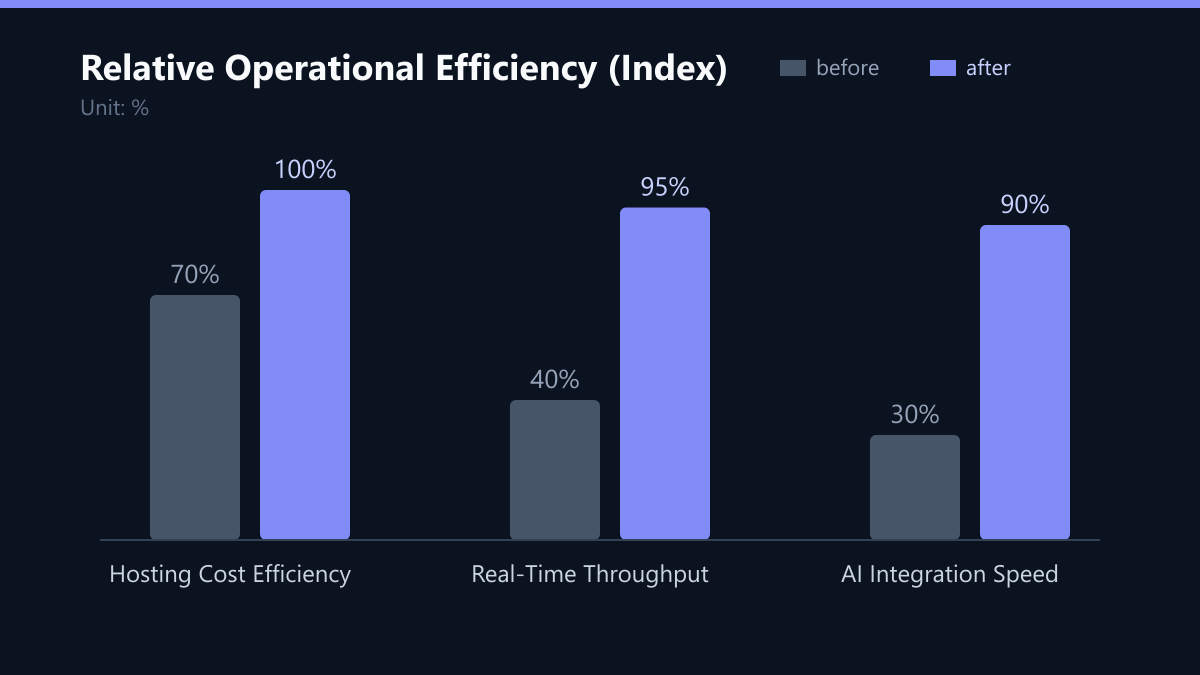
Comparative Analysis: Performance vs. Economics
To make an informed decision, you must look beyond raw speed and consider the total economic impact. The following table summarizes the core differences. Note that actual performance depends heavily on your specific implementation and infrastructure setup.
| Criterion | Node.js | Python | PHP |
|---|---|---|---|
| Scalability (I/O Bound) | Very High | Medium (with Async) | High (with OPcache) |
| AI/ML Integration | Medium | Very High | Low |
| Development Speed | High | Very High | High |
| Hosting Costs | Medium | Medium | Low |
| Talent Availability (DACH) | Good | Very Good | Very Good |
The Verdict: There is no universal winner. Node.js wins in real-time responsiveness, Python in intelligent data processing, and PHP in economic stability. Your choice should be driven by your primary bottleneck: Is it concurrency, intelligence, or cost?
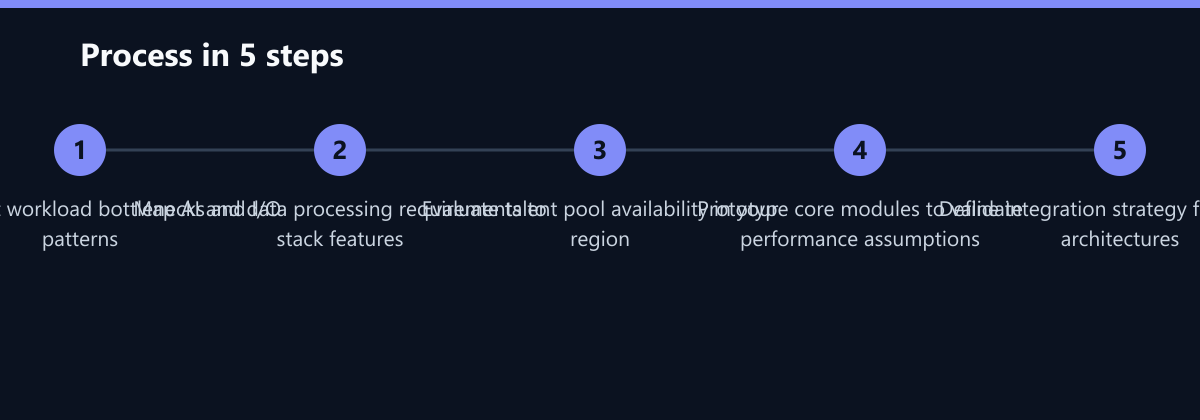
A 5-Step Implementation Framework
To avoid costly mistakes, we recommend a structured approach to stack selection. This framework helps you validate your assumptions before committing to a full-scale build.
- Audit Workload Patterns: Analyze your current application logs. Determine the ratio of CPU-bound to I/O-bound tasks. If 80% of your requests are simple reads/writes with high concurrency, Node.js or PHP are strong contenders. If you require complex data transformations, Python is likely necessary.
- Map AI Requirements: Identify if your product roadmap includes machine learning or data analytics features. If yes, Python should be part of your architecture, either as the primary language or as a microservice.
- Evaluate the Talent Pool: Consider your geographic location. In many European markets, PHP and Python developers are more abundant and affordable than specialized Node.js experts. Factor this into your long-term staffing costs.
- Prototype Core Modules: Do not rely on benchmarks alone. Build a small proof-of-concept for your most critical workflow. Measure the actual latency and resource consumption under simulated load. This step often reveals unexpected bottlenecks.
- Define Integration Strategy: If you choose a polyglot setup (e.g., PHP frontend + Python AI backend), define the API contracts and communication protocols early. Use gRPC or RESTful APIs with clear versioning to minimize integration friction.
Typical Mistakes to Avoid
Even experienced teams make errors when selecting their tech stack. Here are the most common pitfalls we observe in mid-market projects:
- Chasing Hype: Choosing a technology because it is “trendy” rather than because it fits your workload. This often leads to a lack of experienced developers and immature tooling.
- Ignoring Operational Overhead: Underestimating the complexity of managing a polyglot environment. Running three different language runtimes increases DevOps complexity and requires more sophisticated CI/CD pipelines.
- Neglecting Security Audits: Assuming that a popular language is inherently secure. Node.js, for example, has a larger supply chain attack surface due to the size of the npm ecosystem. Regular dependency scanning is mandatory.
- Over-Engineering: Using a complex microservice architecture with Node.js for a simple CRUD application. This increases latency and cost without providing tangible benefits.
How You Measure Success
Success is not just about launching the application; it is about maintaining performance and cost efficiency over time. You should track the following KPIs to validate your stack choice:
- P95 Latency: Measure the 95th percentile response time under peak load. A well-chosen stack should maintain P95 latency under 200ms for standard web requests.
- Cost per 1,000 Requests: Calculate your infrastructure costs (CPU, memory, bandwidth) divided by the number of requests handled. This metric reveals the true economic efficiency of your stack.
- Deployment Frequency: Track how often you can deploy new features. A stack that allows for rapid, safe deployments reduces time-to-market and increases agility.
- Mean Time to Recovery (MTTR): Measure how quickly you can recover from a failure. A stack with good observability and tooling will have a lower MTTR.
Checklist for Final Decision
Before finalizing your architecture, ensure you have answered the following questions:
- Have we identified our primary bottleneck (CPU, I/O, or Memory)?
- Do we have a clear plan for AI or data processing integration?
- Have we validated the availability of skilled developers in our region?
- Have we prototyped the critical path to confirm performance assumptions?
- Have we defined the security and compliance requirements for the chosen stack?
- Is the DevOps team prepared to support the chosen runtime and tooling?
Passend dazu
- IT Consulting & IT Strategy
- AI Consulting & AI Strategy
- Reducing TCO by 30 Percent: Managed Hosting with Automated Backup for an Austrian Tech Accessories Provider
- Cloud Services & Cloud Migration
- IT Compliance & Data Protection
- E-Commerce Development
- Azure DevOps vs. GitHub Actions: CI/CD Strategy for IT Service Providers