The Compliance Bottleneck
For a mid-sized industrial machinery manufacturer in the DACH region with 145 employees, the annual GDPR audit had become a significant operational drag. The process was not merely a bureaucratic hurdle but a critical security risk. IT staff were spending six weeks of manual effort each year to prepare for the audit. This involved hours of laborious work checking server logs, email archives, and network shares for personal data.
The manual approach was inherently flawed. It was slow, prone to human error, and impossible to scale. With the introduction of NIS2 and stricter ISO 27001 requirements, the risk of non-compliance was no longer acceptable. A single missed record of employee health data or customer address could result in significant fines and reputational damage. The company needed a scalable, automated solution to identify and classify personal data across their hybrid infrastructure, which included both Microsoft 365 cloud services and on-premise servers.
The Challenges
The project faced three primary hurdles that complicated the deployment of an automated solution:
- Hybrid Infrastructure Complexity: The data was scattered across multiple environments, including cloud-based collaboration tools and legacy on-premise file servers. Ensuring the classification engine could scan all these locations seamlessly without disrupting production was a technical challenge.
- Data Sensitivity and Context: Not all personal data is treated equally. The system needed to distinguish between a customer’s shipping address (confidential) and an employee’s internal ID (restricted). Misclassifying data could lead to either unnecessary security restrictions or, worse, a security breach.
- Change Management: The IT team was accustomed to manual processes. Shifting to an automated, rule-based system required trust in the AI-driven patterns and a clear understanding of how the new tagging rules would affect daily workflows.
The Tech Stack
To address these challenges, we utilized a focused stack of tools:
- Data Loss Prevention (DLP) Module: The core engine for scanning and identifying data patterns.
- AI-Based Pattern Recognition: Custom-trained algorithms to detect specific PII markers such as employee IDs, customer addresses, and health data.
- Microsoft 365 Integration: Native connectors to scan email, OneDrive, and SharePoint for personal data.
- On-Premise Agent: A lightweight agent deployed on legacy servers to scan local file shares and database entries.
- Automated Tagging Engine: A rule-based system that applies classification labels (Public, Internal, Confidential, Restricted) in real-time.
Implementation: From Audit to Automation
We approached the project as a two-phase initiative, completed over a total of eight weeks. The goal was to move from a reactive, manual audit process to a proactive, automated compliance framework.
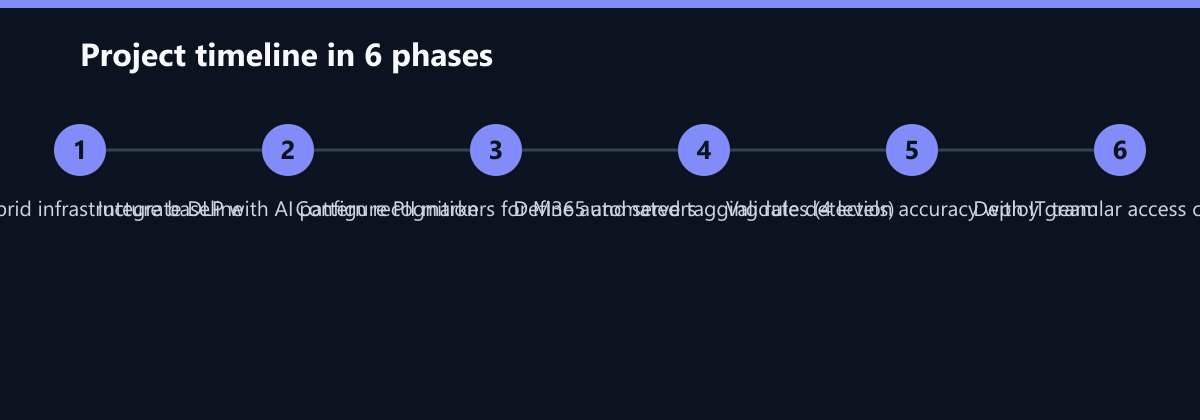
Phase 1: Integration and Pattern Recognition (Weeks 1-4)
The first phase focused on integrating the DLP module into the existing environment. We began by mapping the hybrid infrastructure to identify all data repositories. We then configured the AI-based pattern recognition system to scan for specific PII markers. This included not just standard data points like names and emails, but also industry-specific markers such as employee IDs and health data, which are particularly sensitive in a manufacturing context.
We tested the scanning capabilities in a non-production environment to fine-tune the sensitivity levels. This step was crucial to minimize false positives, which could have overwhelmed the IT team with alerts. The system was configured to scan both Microsoft 365 tenants and on-premise servers, ensuring comprehensive coverage.
Phase 2: Automated Tagging and Access Controls (Weeks 5-8)
Once the detection engine was validated, we moved to the tagging phase. We established automated rules that categorized data into four levels: ‘Public,’ ‘Internal,’ ‘Confidential,’ and ‘Restricted.’
- Public: Data that can be shared externally without restriction.
- Internal: Data for internal use only, not sensitive but not public.
- Confidential: Data containing personal information, requiring limited access.
- Restricted: Highly sensitive data, such as health records or financial data, requiring encryption and strict access controls.
The system was configured to automatically apply these tags as data was created or modified. This allowed the IT team to apply granular access controls without manual intervention. For example, any file tagged as ‘Restricted’ was automatically encrypted, and access was restricted to a predefined list of authorized personnel.
How We Measured It
To ensure the solution delivered on its promises, we established clear KPIs before and after the implementation:
- Audit Preparation Time: Measured by the total number of man-hours spent by the IT team preparing for the GDPR audit. Baseline: 6 weeks (approx. 120 man-hours). Target: Reduce by 50%.
- PII Detection Rate: Measured by the number of unique personal data records identified by the system compared to the previous manual audit. Baseline: 100% of known records. Target: Identify at least 10% more unclassified data.
- False Positive Rate: Measured by the number of alerts that were not actually personal data. Target: Less than 5% of total alerts.
The measurement process involved running the automated system in parallel with the manual audit process for one cycle. This allowed us to compare the results directly and validate the accuracy of the AI-driven classification.
Results: Significant Time Savings and Risk Reduction
The results of the implementation exceeded our initial targets. The automated system identified 30% more unclassified personal data than the previous manual audit had detected. This was a significant finding, as it revealed sensitive employee data in shared network folders that had been overlooked for years. This data was now automatically tagged as ‘Restricted,’ and access was restricted accordingly.
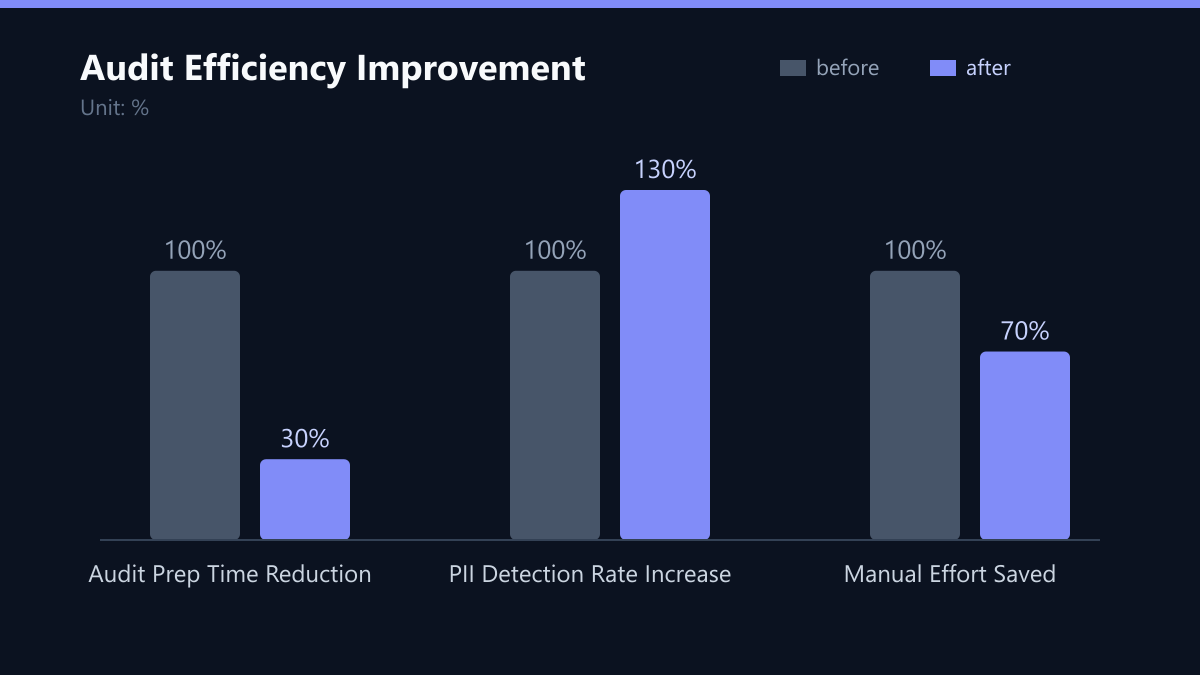
The time required to prepare for the next audit dropped from six weeks to just five days. This represents a 70% reduction in effort. The IT team no longer needed to spend hours manually checking logs and archives. Instead, they could rely on the automated reports generated by the DLP system, which provided a clear, real-time view of the data privacy landscape.
This 70% reduction in effort freed up the IT team to focus on strategic projects rather than compliance drudgery. Furthermore, the automated tagging reduced the risk of accidental data leaks by ensuring that ‘Restricted’ data was automatically encrypted and access-restricted. This proactive approach to data protection not only reduced legal risk but also demonstrated due diligence to partners and customers.
What We Would Do Differently Today
While the project was successful, there are two areas where we would refine our approach in a similar engagement:
- Earlier Stakeholder Involvement: We would involve business unit leaders earlier in the process to define what constitutes ‘Confidential’ and ‘Restricted’ data. This would reduce the number of iterations needed to fine-tune the tagging rules and ensure that the classification aligns with business needs, not just technical definitions.
- Phased Rollout of Access Controls: Instead of implementing all access controls at once, we would phase them in. Starting with ‘Restricted’ data and then moving to ‘Confidential’ data would allow the IT team to monitor the impact on workflows and make adjustments before full rollout. This would reduce the risk of disrupting daily operations.
Lessons Learned: Automation is Essential for Compliance
The key takeaway from this project is that manual audits cannot keep pace with the volume and complexity of data in modern businesses. Automated classification provides a continuous, real-time view of data privacy, rather than a snapshot taken once a year.
For mid-sized companies, this shift from reactive to proactive compliance is critical. It not only reduces legal risk but also demonstrates due diligence to partners and customers. The investment in automated tools pays for itself in reduced labor costs and avoided fines.
As regulatory requirements like NIS2 and ISO 27001 become stricter, companies must move beyond periodic audits and embrace continuous compliance. Automated data classification is a key enabler of this shift, providing the visibility and control needed to manage data privacy risks effectively. By implementing this solution, the manufacturer not only reduced their audit burden but also strengthened their overall security posture, ensuring that sensitive data is protected at all times.
Passend dazu
- IT & Data Recovery (Disaster Recovery)
- IT Consulting & IT Strategy
- IT Compliance & Data Protection
- Cloud Services & Cloud Migration
- E-Commerce Development
- E-Commerce Retailer Cuts Recovery Costs by 40% with Azure Site Recovery
- Streamlining DevOps Pipelines for Manufacturing in Asia
- Cross-Continental DR for a New York Manufacturing Client: Synchronizing Production Data to Singapore to Meet Global SLAs
- Manufacturing Data Recovery: Restoring 2TB of ERP Data in 45 Minutes After Ransomware Attack in Bavaria